


 아르코 통합플랫폼 바로가기
SCENE
(ENG)From the bottari to the universe,
The world woven by Kimsooja
- 저자
- 글_에이스퀘어 (편집부)
- 발행일
- 2025-10-01
<To Breathe-Sunhyewon>, Kimsooja’s latest solo exhibition at Sunhyewon, to her recent works at Studio Kimsooja — explore the profound depths of nature and the universe through an interview with the artist Kimsooja.
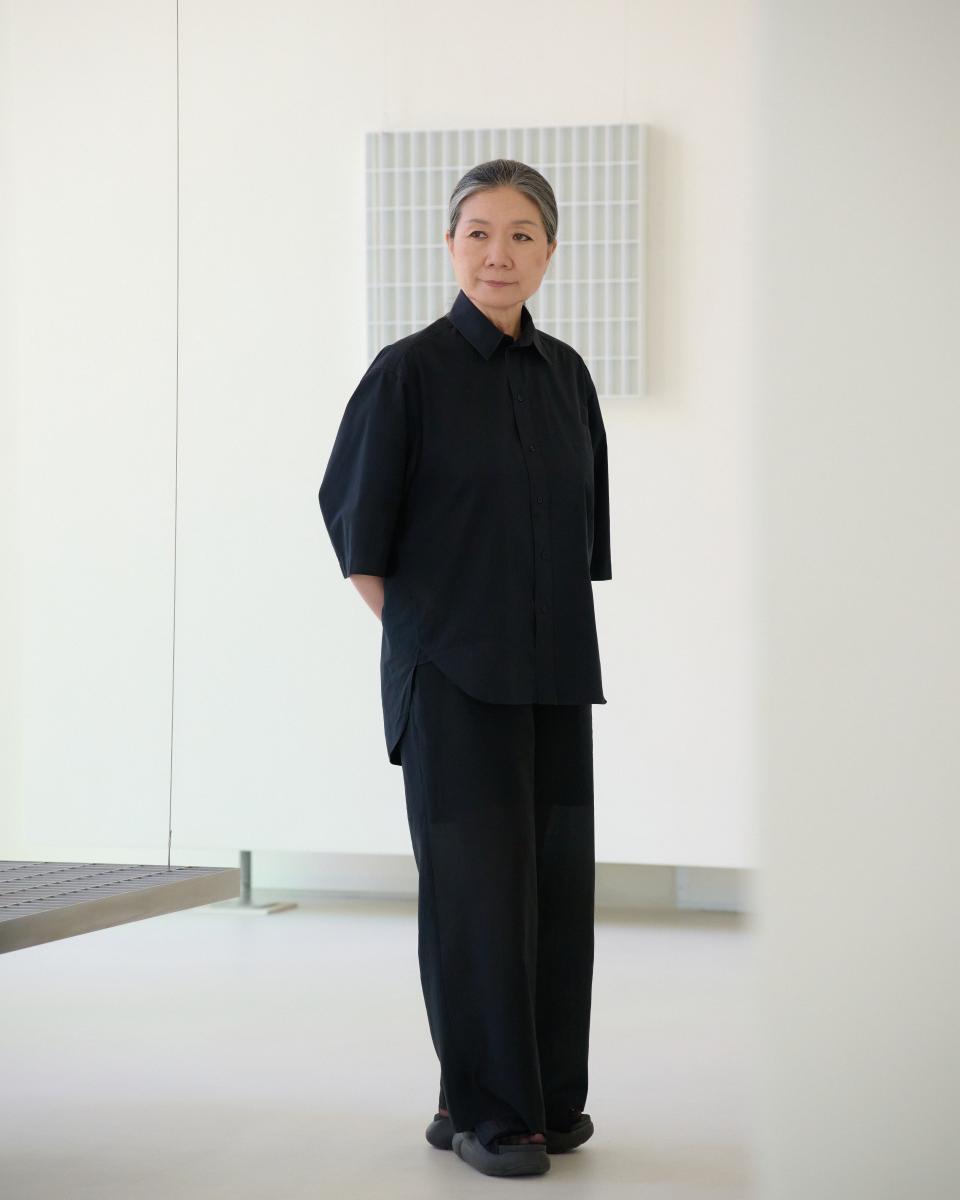
Q1. Since September 3, the exhibition To Breathe – Sunhyewon has been on view. This is the first time you have installed a mirrored work in a Hanok, the traditional Korean architecture. Could you tell us about the process of realising this exhibition?
As soon as I received the exhibition proposal and saw the space, I immediately thought that mirrors should be laid here. I have always wanted to work in a Hanok, and Sunhyewon was especially interesting because it is larger than typical Hanok, with high ceilings and balcony-like spaces. Since my installation and video project in Yangdong Village in 1994, I have maintained a continuous interest in Hanok architecture. The structures of Hanok, traditional Korean furniture, and even Hangul can be seen as combinations of heaven, earth, and human—the three elements of the cosmos. These structural ideas are also integral elements of my work, so when the opportunity arose, I was eager to present an exhibition here. Sunhyewon’s architecture—the frame, the grand pillars—was breathtaking, and I wanted to reinterpret and showcase it as an architectural bridge in my work.
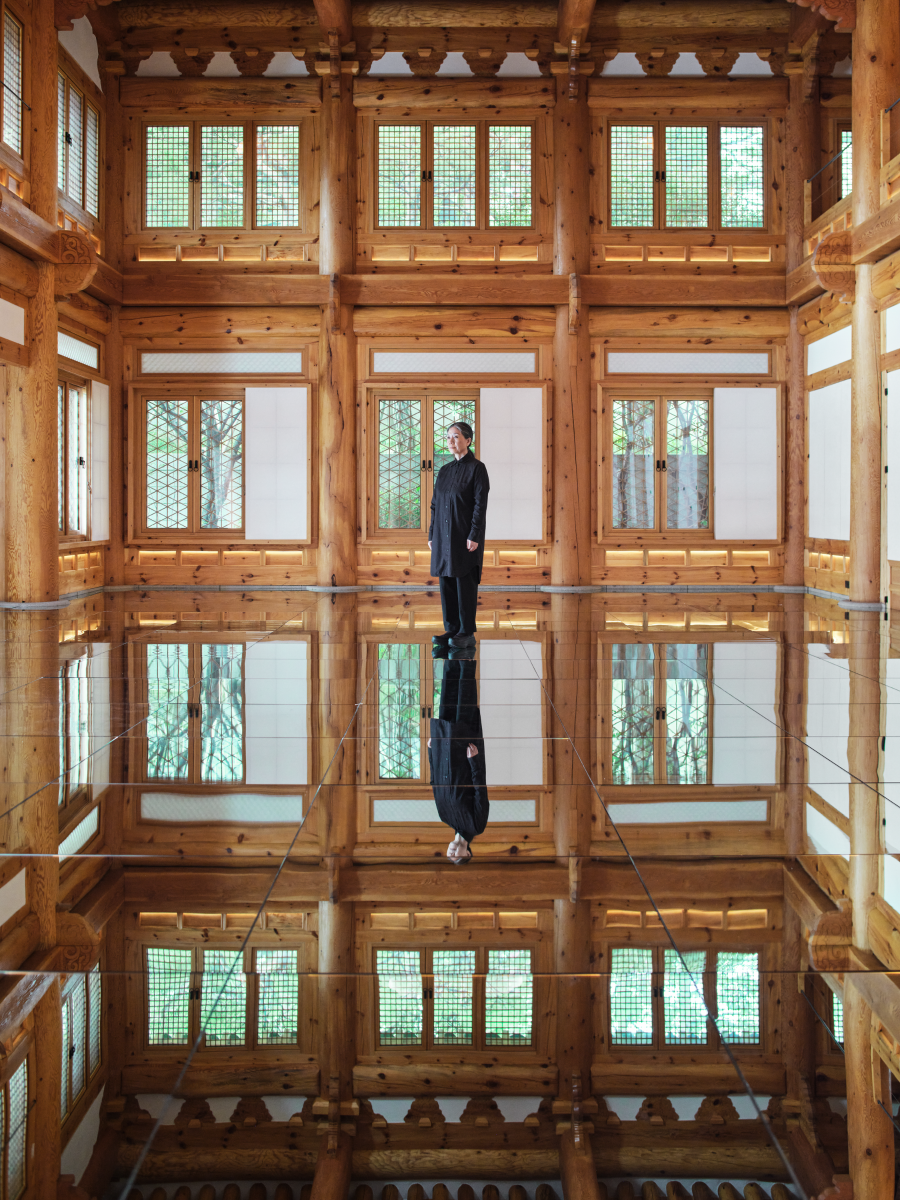
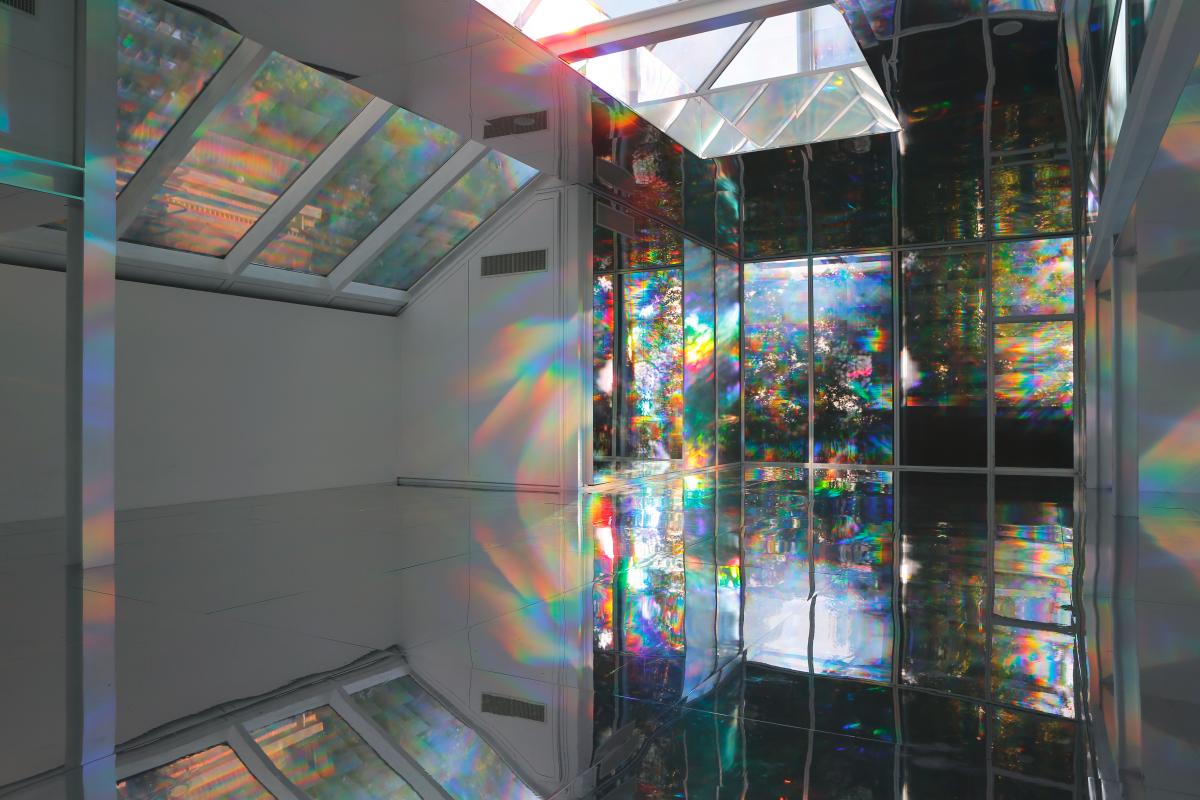
Kimsooja , <To Breathe – Sunhyewon>, 2025, site-specific installation using mirror panels , variable size
Image courtesy of Podo Museum, Studio Kimsooja
Q2. The exhibition extends from Kyongheunggak to the lobby and down to the basement. What points did you keep in mind when envisioning the show?
You could think of this exhibition as having three Bottari. In the basement, there is the original Bottari made from traditional Korean embroidered quilts and old clothes. On the first floor, there are Bottari made of ceramics. And one floor up, inside Kyongheunggak, there is a spatial Bottari created through the mirrors, a virtual one. Rooting from the question of defining what a Bottari is, the exhibition presents these three directions I have continuously explored and experimented with simultaneously.
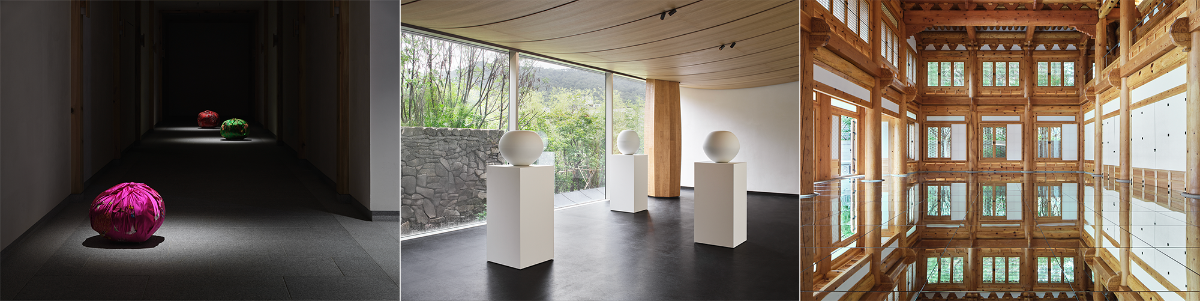
From left: (1) Kimsooja , <Bottari> , 2022, used quilt and clothes , variable size
(2) Kimsooja, < Deductive Object – Bottari>, 2023, white porcelain , variable size
(3) Kimsooja, < To Breathe – Sunhyewon >, 2025, site-specific installation using mirror panels , variable size
Image courtesy of Podo Museum, Studio Kimsooja
Q3. How did it feel to walk on the mirrored floor of Kyongheunggak? I imagine it must have felt quite different from European architecture.
This work is ultimately about the meeting of halves. When I exhibited at the Bourse de Commerce - Pinault Collection, I installed mirrors in the rotunda alongside moon jar-shaped porcelain works conceptualized as Bottari. I realized that, despite the difference in scale, both works shared the same underlying idea: the meeting of two domes. The midpoint of the moon jar becomes a “mirror that is not a mirror”—a mirror as an empty space. Recognizing this point was incredibly fascinating for me. Following this major discovery, in the current exhibition, that same concept unfolds anew across vertical and horizontal spaces, offering a new experience.
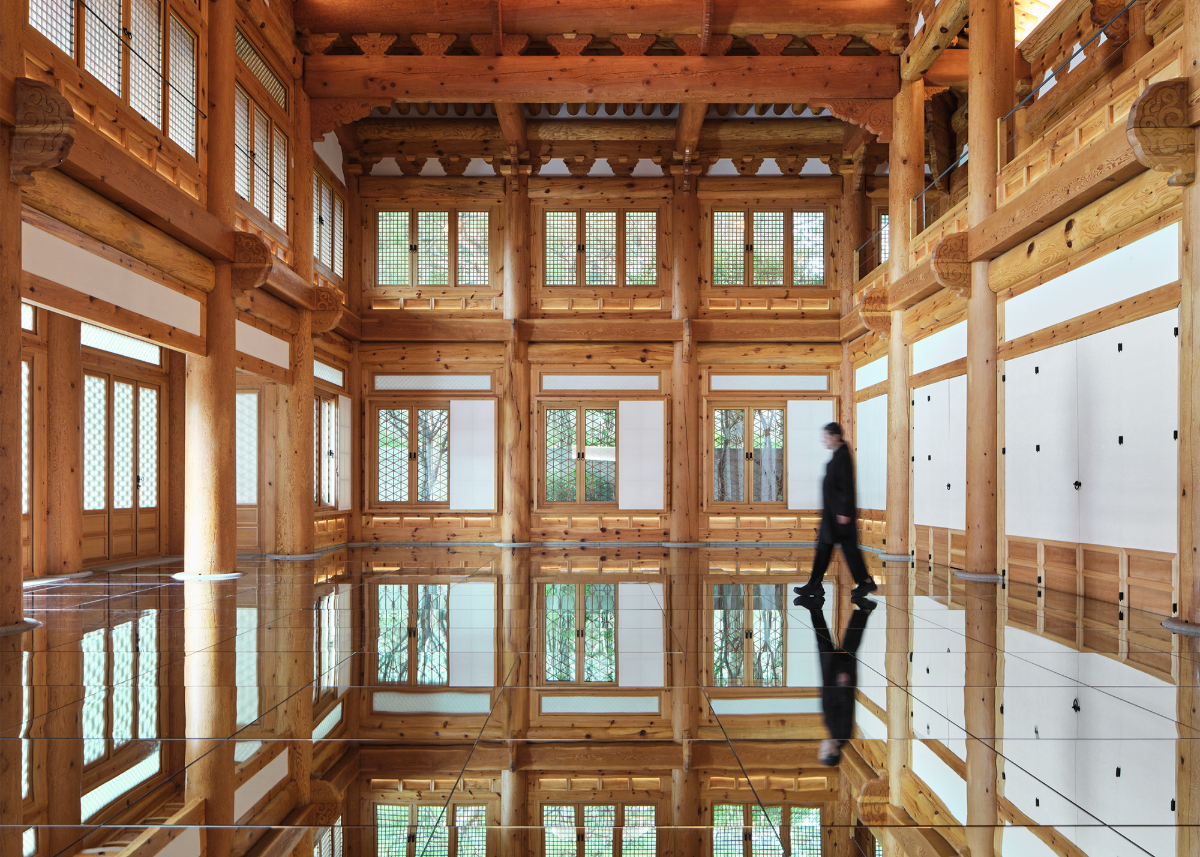
Kimsooja , < To Breathe – Sunhyewon>, 2025, site-specific installation using mirror panels , variable size
Image courtesy of Podo Museum, Studio Kimsooja
Q4. Your collaborations with Meissen porcelain—Deductive Object: Bottari and Sewing into Soil: Invisible Needle, Invisible Thread—involved piercing white porcelain plates with a needle to create holes of light. What does earth or clay signify in your work?
Porcelain itself can be understood as a kind of Bottari. In the process of making it, the potter’s wheel spins and the clay takes shape as if wrapping the void—this is not so different from the act of wrapping with cloth. That is why I adopted the Moon Jar as a Bottari. Yet, instead of leaving it with an opening or a base, I punctured only a single needle hole, so that what is enveloped inside is nothing but darkness—an inner world that could also be seen as a cosmic realm.
The act of sewing into spread-out clay plates also reminded me of planting rice seedlings, the way one sows seeds into soil. It is an act carried out with the body’s rhythm and dynamic energy, a gesture made in an instant, yet the resulting holes once again reveal nothing but open void. Placing these two gestures side by side—bundling with clay and piercing through it—was, for me, a way of allowing their meanings to converge.
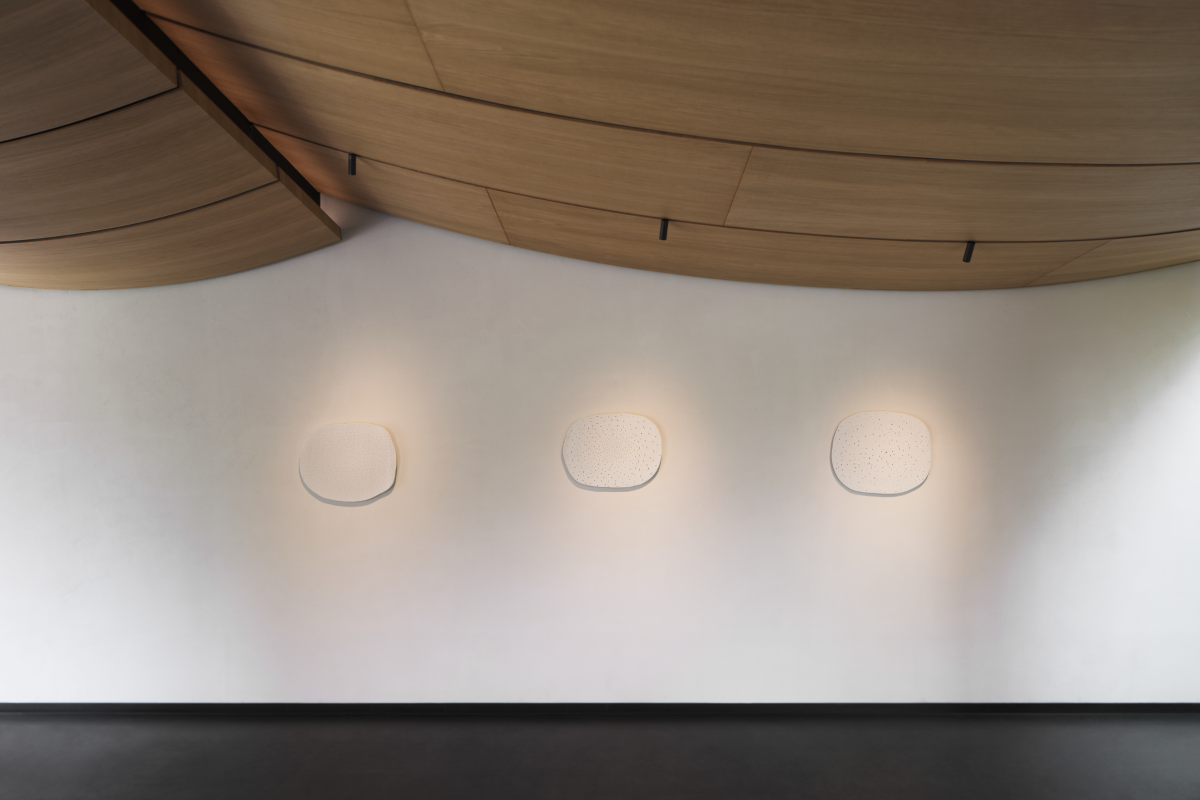
Kimsooja , < Sewing on the Ground : Invisible Needle , Invisible Thread >, 2023, white porcelain , variable size
Image courtesy of Podo Museum , Studio Kimsooja
Q5. Your concept of the Bottari has continued to evolve and expand. In the recent edition of Desert X, To Breathe – Coachella Valley appeared as a monumental, rainbow-hued vortex across the vast desert—almost like a “Bottari of light.” What was it like to realize this work in the desert?
Before Coachella, I first presented this work in AlUla, Saudi Arabia. The landscape there was quite unique: in the desert, small, nameless plants grew in swirling formations, as if tracing the wind and sand. I was deeply inspired by these forms, which conveyed the movement of nature and its ecological vitality. Even in a single blade of grass, I could feel the primordial breath of nature. The work also reflects on cosmic movement—the immense passage of time between the sun’s rays striking the earth and their eventual contact with the diffraction film. For me, it was not only about Bottari, but about how each new work always emerges in dialogue with the context of past works. The process is born from the collision of inner voice and artistic impulse, and only afterward do logic and structure follow. In making these connections, I feel I am constantly learning—and with each step, discovering a renewed passion. It is a continuous unfolding of that passion.
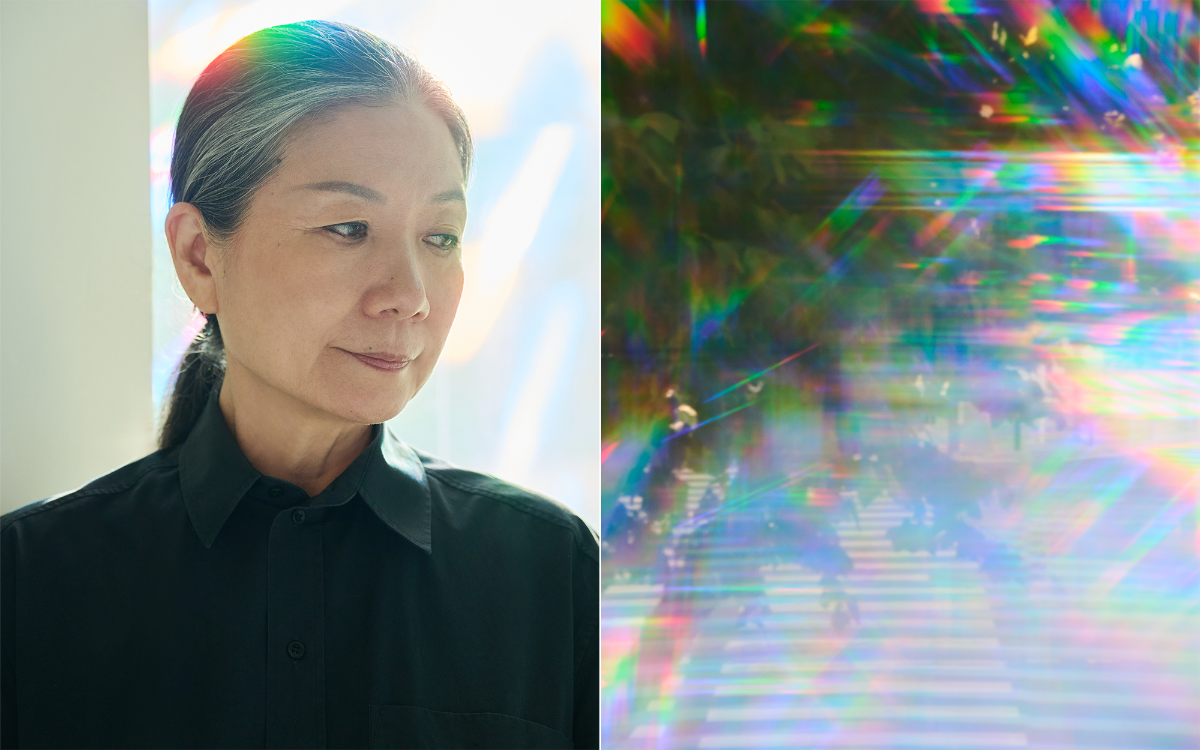
Artist Kimsooja stands before To Breathe, installed on the glass window of an open studio.
The work brings in new scenery over time , creating rainbow-colored reflections as cars pass by outside .
(Right) Kimsooja, To Breathe,2024, site-specific installation with diffraction grating film, dimensions variable.
Q6. When viewing your Meta-Painting Series, one sometimes feels as though being drawn into a black hole, or as if space suddenly expands into a cosmic dimension. What does black mean to you?
My first work with black was in 2016, when I participated in the Nara Project at Gango-ji Temple in Nara, Japan. Gango-ji is the oldest temple in Japan, originally founded by monks and artisans who had come from Korea. For the project, I laid mirrors on the temple’s outdoor ground and placed a black oval-shaped sculpture on top. At that time, I couldn’t use the deepest black I wanted, because Anish Kapoor had exclusive rights to Vantablack. So I had to search for and work with the darkest black available. Still, I wasn’t satisfied, so I continued experimenting, and only recently was I able to develop a black nearly equivalent to Vantablack. With it, I could finally realize the depth of black I envisioned—one that creates an optical illusion where, from certain angles, it becomes impossible to perceive whether an object or surface is there at all. Lately, I have been deeply immersed in this pursuit: the world of black, my world. Ultimately, it is the world of ignorance—the realm of the unknown.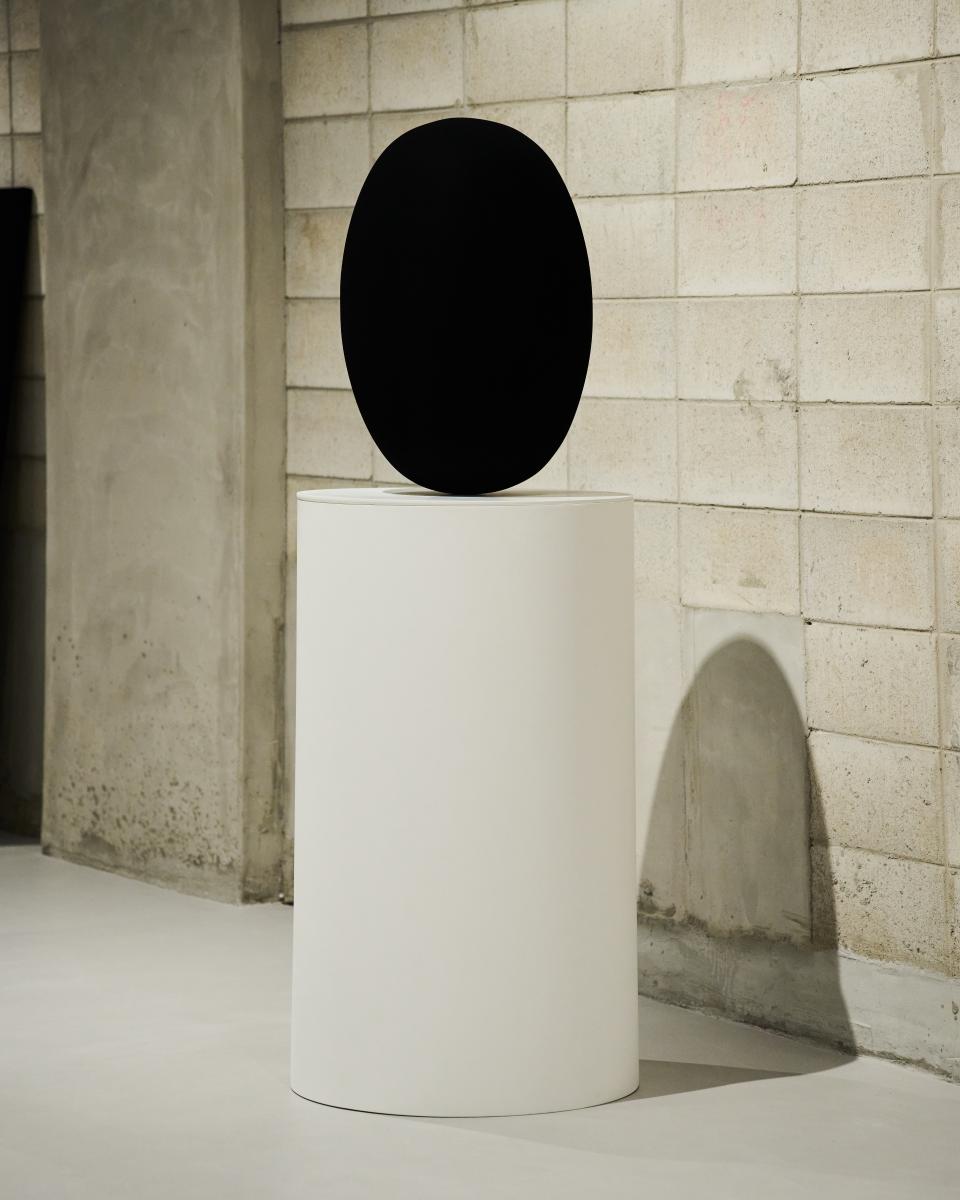
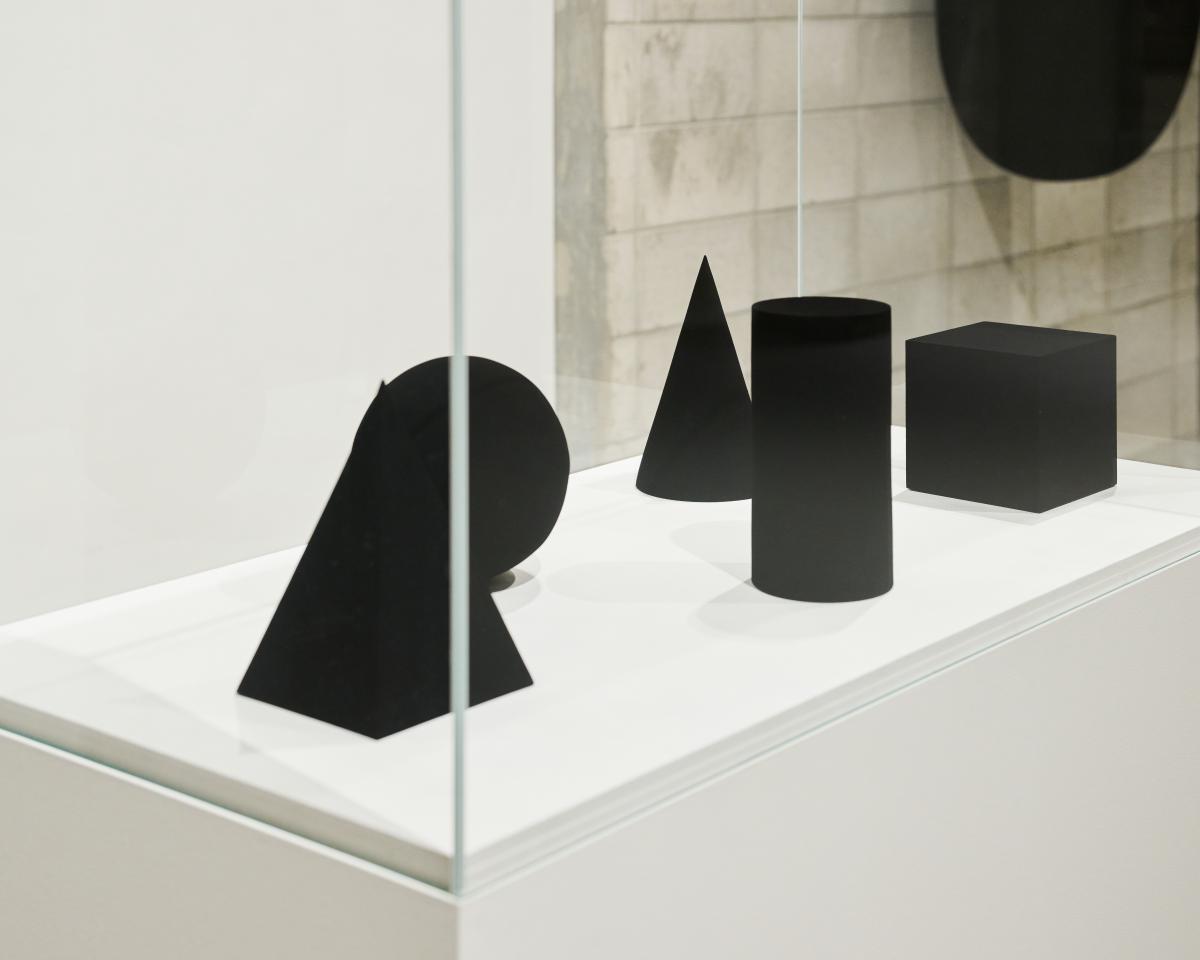
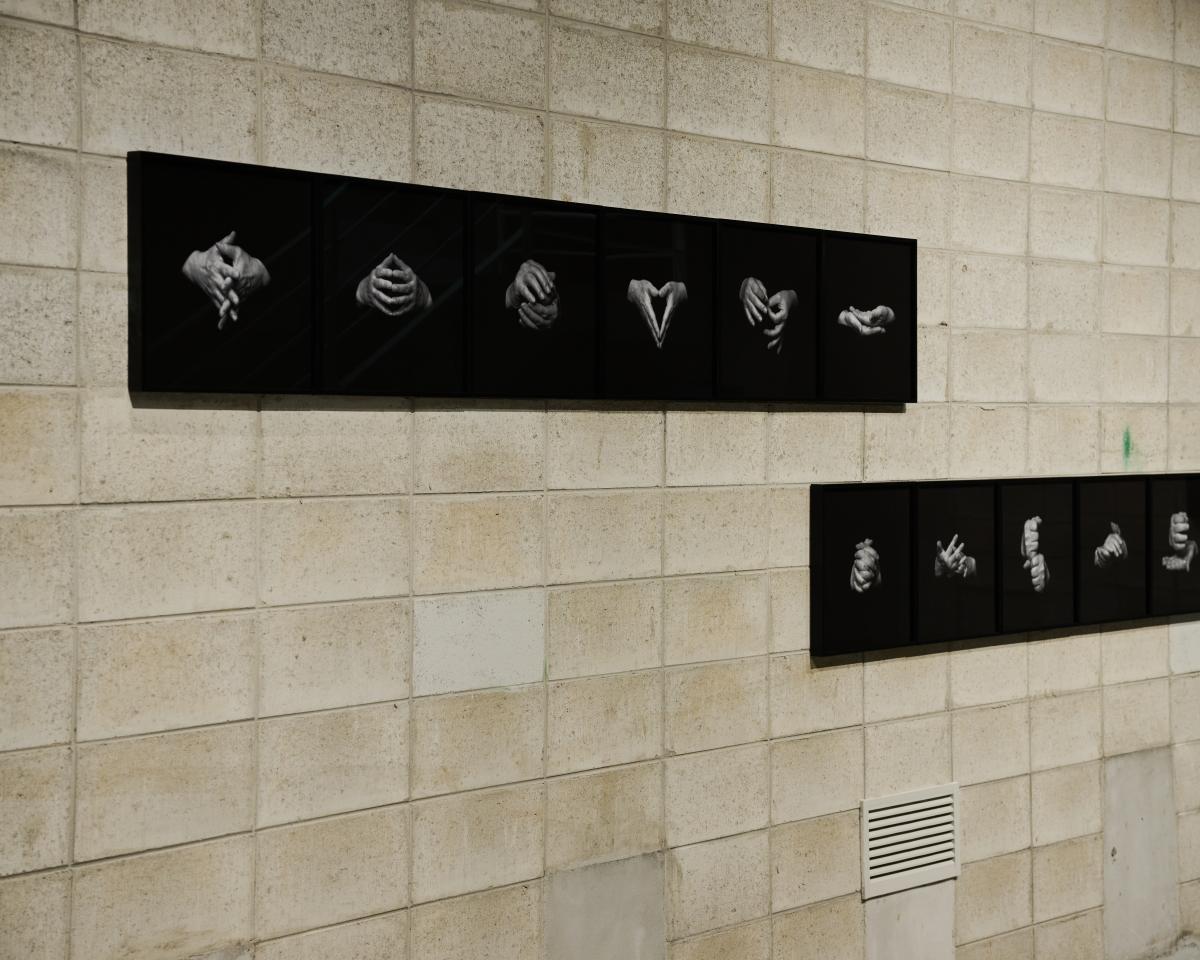
Artist Kimsooja's deductive objects, expanding into various shapes and sizes.
(1) Kimsooja, Deductive Object, 2025, black paint on cast, base, 90 x 57 cm
(2) Kimsooja,Deductive Object – Black Garden, 2024, matte black paint on wooden sculptures, wooden board, 56 x 112.7 x 26 cm
(3) Kimsooja, Deductive Language, 2025, artist’s hand photos, archival pigment print, set of 12 prints, each 41.8 x 41.8 cm
Q7. In 2013, you had also created a room of darkness for the Venice Biennale Korean Pavilion.
Yes, it was a completely black room that absorbed all sound, where visitors could feel the presence of their own breathing. It was like a tomb, and at the same time like a womb. Even now, I see black as such a space. The reason I created that work at the time was because, in 2012, Hurricane Sandy hit New York, and I lived for nearly two weeks without electricity, in the absence of light. That experience led me to reflect on the fear of the unknown. Today, I find myself drawn even more deeply to black, but for another reason: after the passing of my husband, I began to focus intently on questions about death. This unknown world—this world without answers—is something I wish to explore.
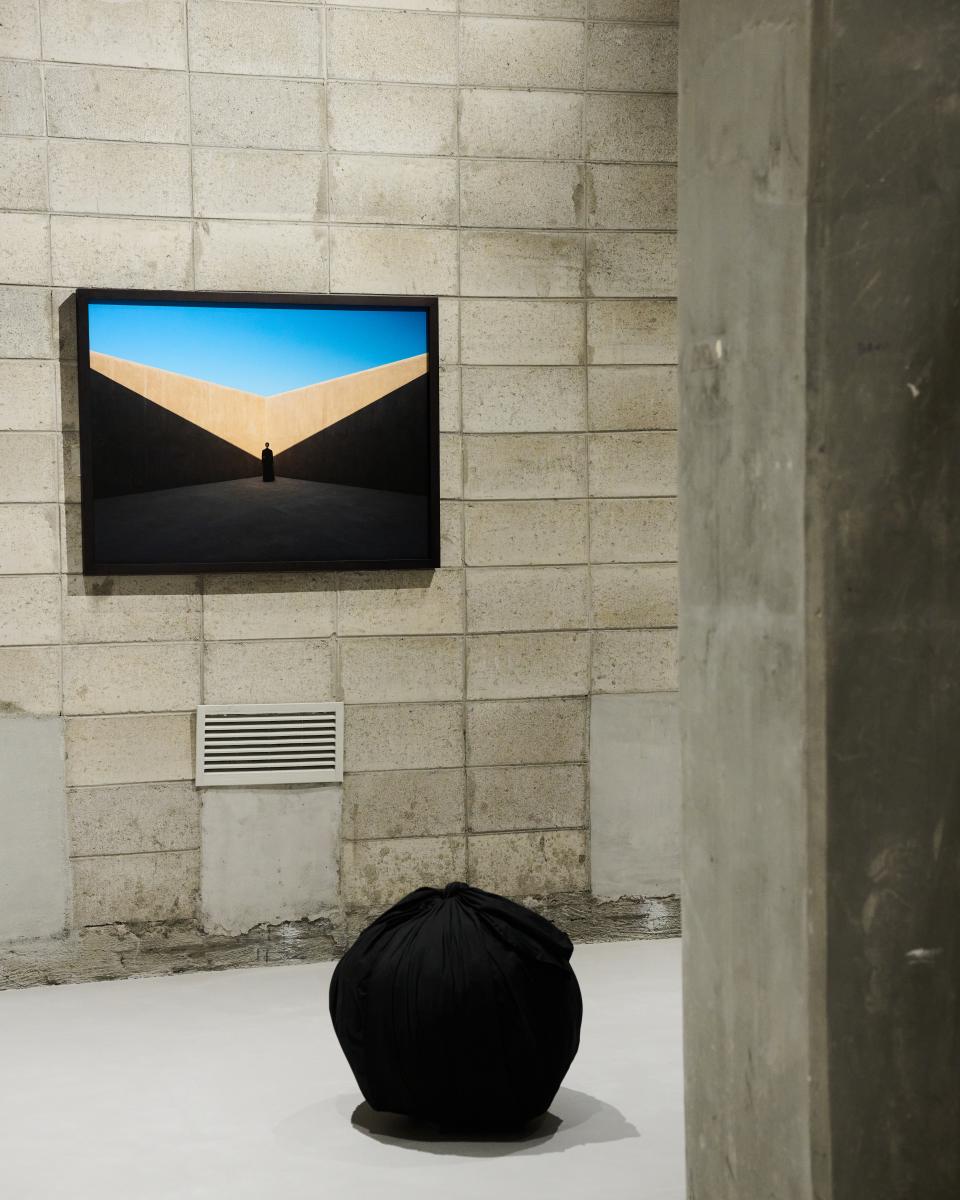
(1) Kimsooja, To Breathe: Bottari, 2013, partial installation view of the Korean Pavilion,
The 55th Biennale di Venezia, Courtesy of Studio Kimsooja. Photo by Jaeho Chong
(2) Kimsooja, A Needle Woman – Jaoseon, 2023, archival pigment print, 75 x 100 cm
Kimsooja, Bottari – a couple, 2020, used clothing of the artist and her late husband, cloth, 60 x 60 x 50 cm
Q8. Up until the early 2000s, your practice centered on material works created through the act of sewing. Afterward, you expanded into light, shadow, and other immaterial forms of work—and now your focus has returned to painting.
The reason I began painting was, formally speaking, a set of questions about what lies beyond the canvas as an object, its position on the wall, and the structure of the plane itself. You could say that my current practice is the destination of those ongoing questions. At first, I addressed them through the act of sewing, but once I came to realize that the act of sewing is essentially an act of wrapping, as I understood that the wrapping process had already been underway—sewing as a way of enclosing the three-dimensional. From there, I continued experimenting symbolically with the needle through my own body, with Bottari, and through various performances. Now, I have returned to painting itself, which I see as the most fundamental form of questioning.
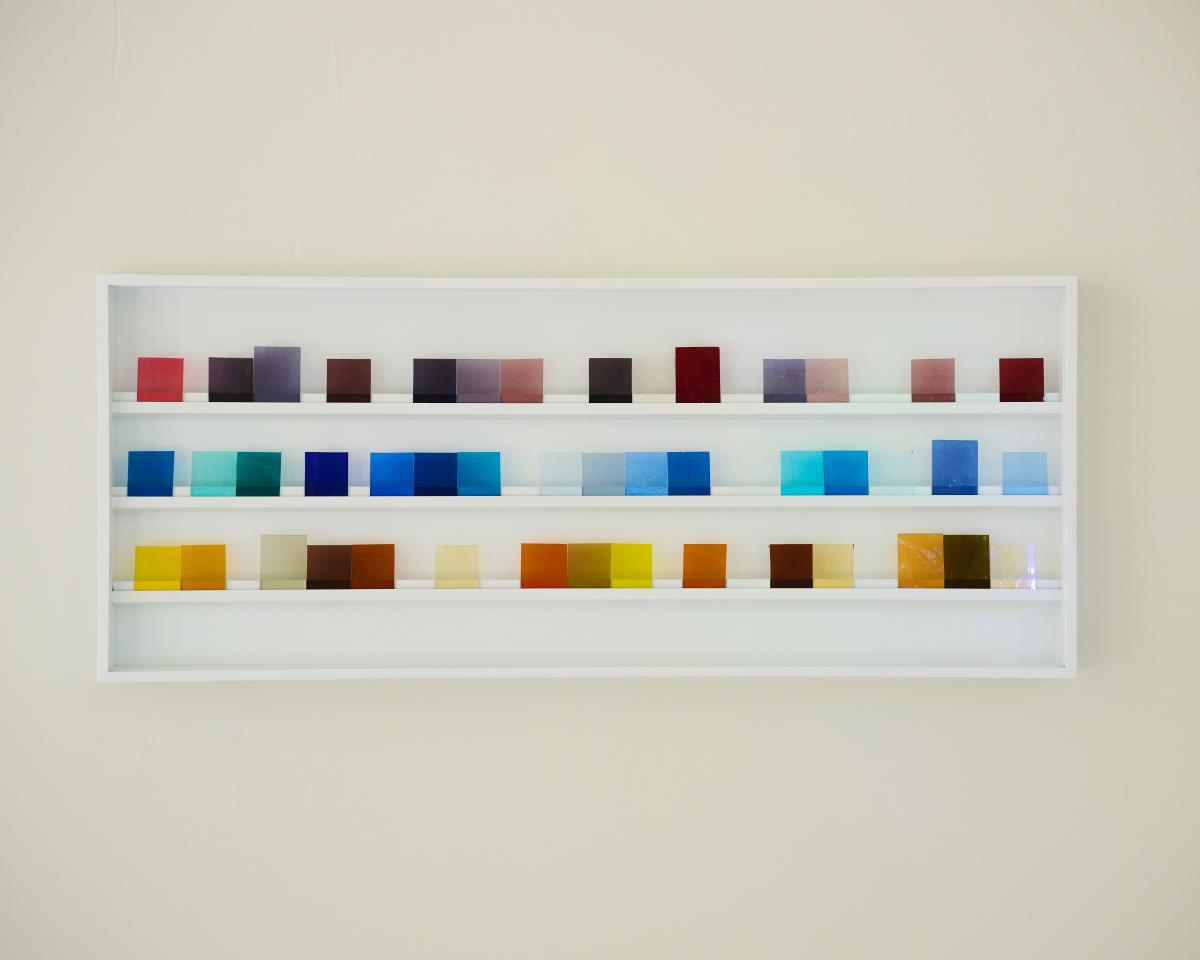
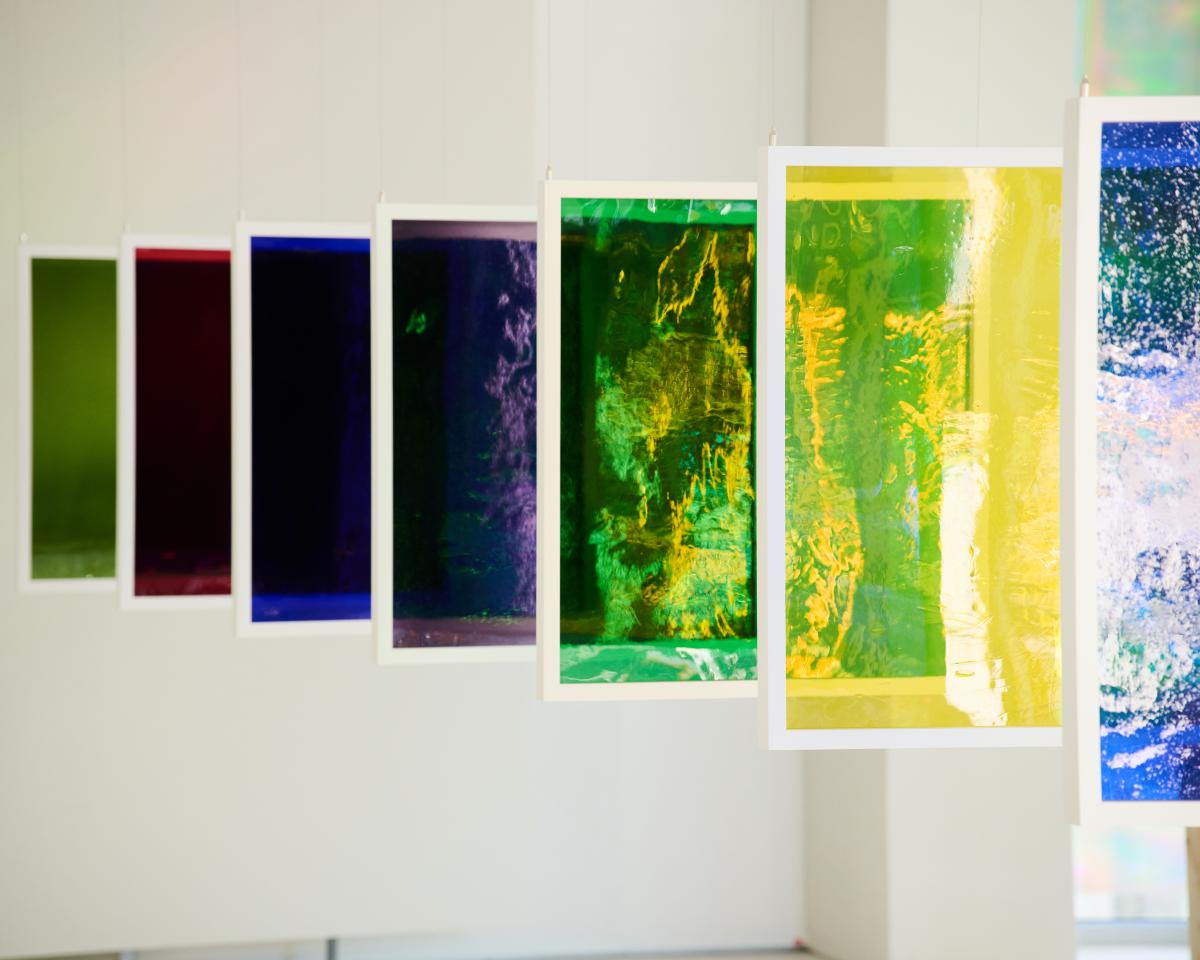
Kimsooja's paintings, which began with questions about the subject called canvas, go through sewing , performance , and architectural experiments before asking the original question again .
(1) Kimsooja, Meta Painting – Seven Colors, 2025, glass, each 80 x 73 cm
(2) Kimsooja, Meta Painting – Glass Swatches,2025, glass, 36.3 x 93.5 x 6 cm
Q9. Your early works brought women’s domestic labor—such as sewing and laundry—into the realm of art. Today, much labor is being replaced by machines, robots, and AI, giving humans new roles. At this moment, what does sewing signify to you? And if you were to address the theme of women again, what themes would you explore?
When I first became interested in women’s domestic labor, it had been largely overlooked and unacknowledged within the context of contemporary art, without finding its rightful place in history. I wanted to address and express that. Sewing, laundry, ironing, cleaning, shopping, decorating the home, preparing food—all these acts, I felt, pointed toward contemporary art.
As for AI, I am not too familiar with it yet. I sometimes use it for information, translations, or summaries, and I use ChatGPT in that way, but to me AI feels neutral. I’m not sure how one could even assign it a gender, or whether it even makes sense to say it has one. In a way, it may be like a needle with both sexes—a hermaphroditic needle. Like a needle that disappears once its task is complete, AI also vanishes once it has finished what it can do. The person who has just answered me is suddenly gone. Perhaps AI is such a tool.
Similarly, a mirror reflects everything in the world but cannot—or does not—reflect itself. For me, a mirror is like a needle that cannot fold. I find the relationship between AI, the needle, and the mirror fascinating, and I’d like to develop it further in my work.
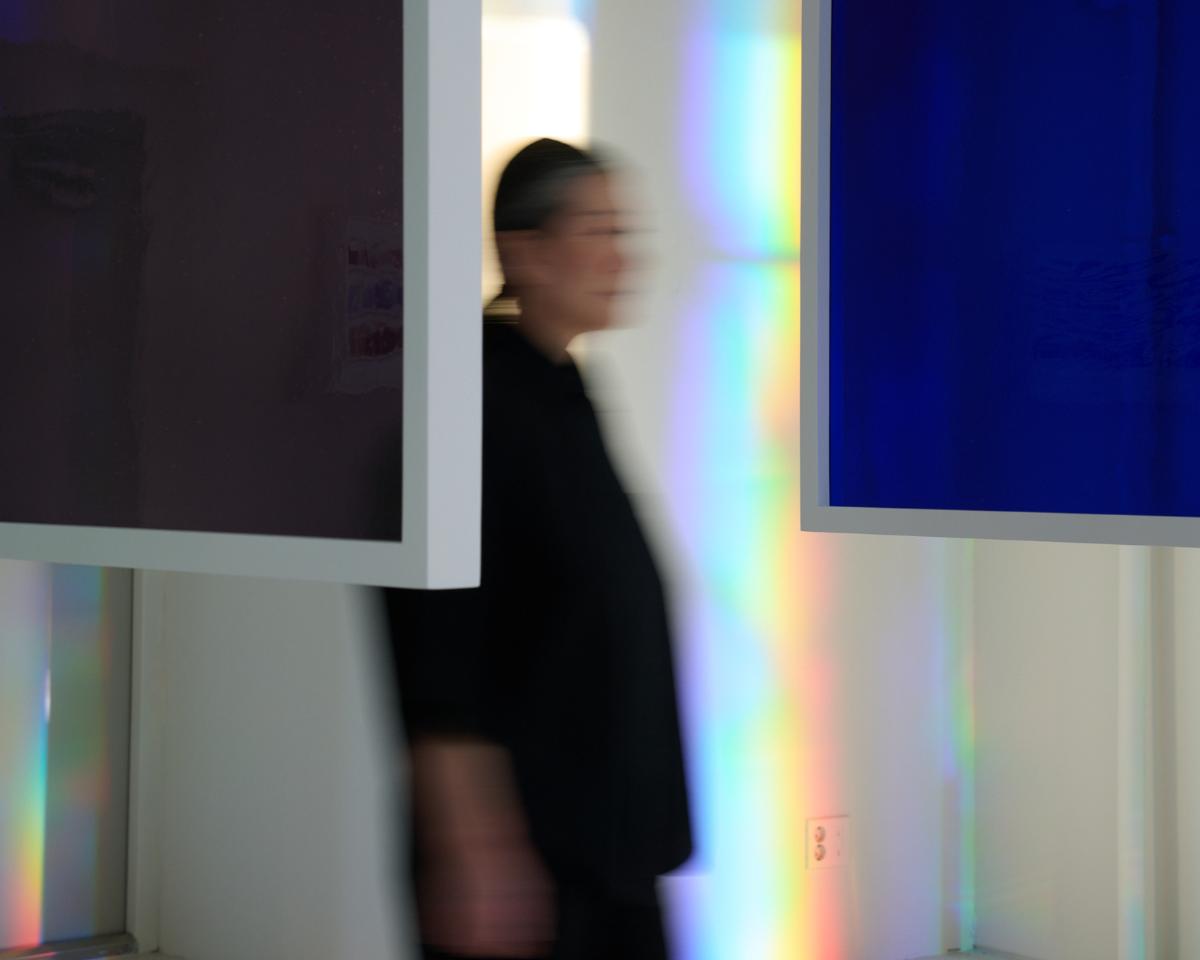
Artist Kimsooja strolling through her works displayed in the studio.
Q10. Please tell us more about the collaborative work with artist Jaeho Chong installed on the second floor of the studio.
Back in 2014, during the 1st CCA Biennale project in collaboration with Cornell University’s Wiesner Nanomaterials Lab, I wanted to create a pavilion. At that time, Jaeho presented the concept of needle-shaped architecture. Since the Biennale’s theme was “Intimate Cosmologies: The Aesthetics of Scale in an Age of Nanotechnology," I felt this form could simultaneously suggest both a cosmic orientation toward the universe and a descent into subterranean time and space. For this recent iteration, Jaeho proposed revisiting the work, and we decided to present it purely as a design without panels—resulting in the sculptural form now on display.
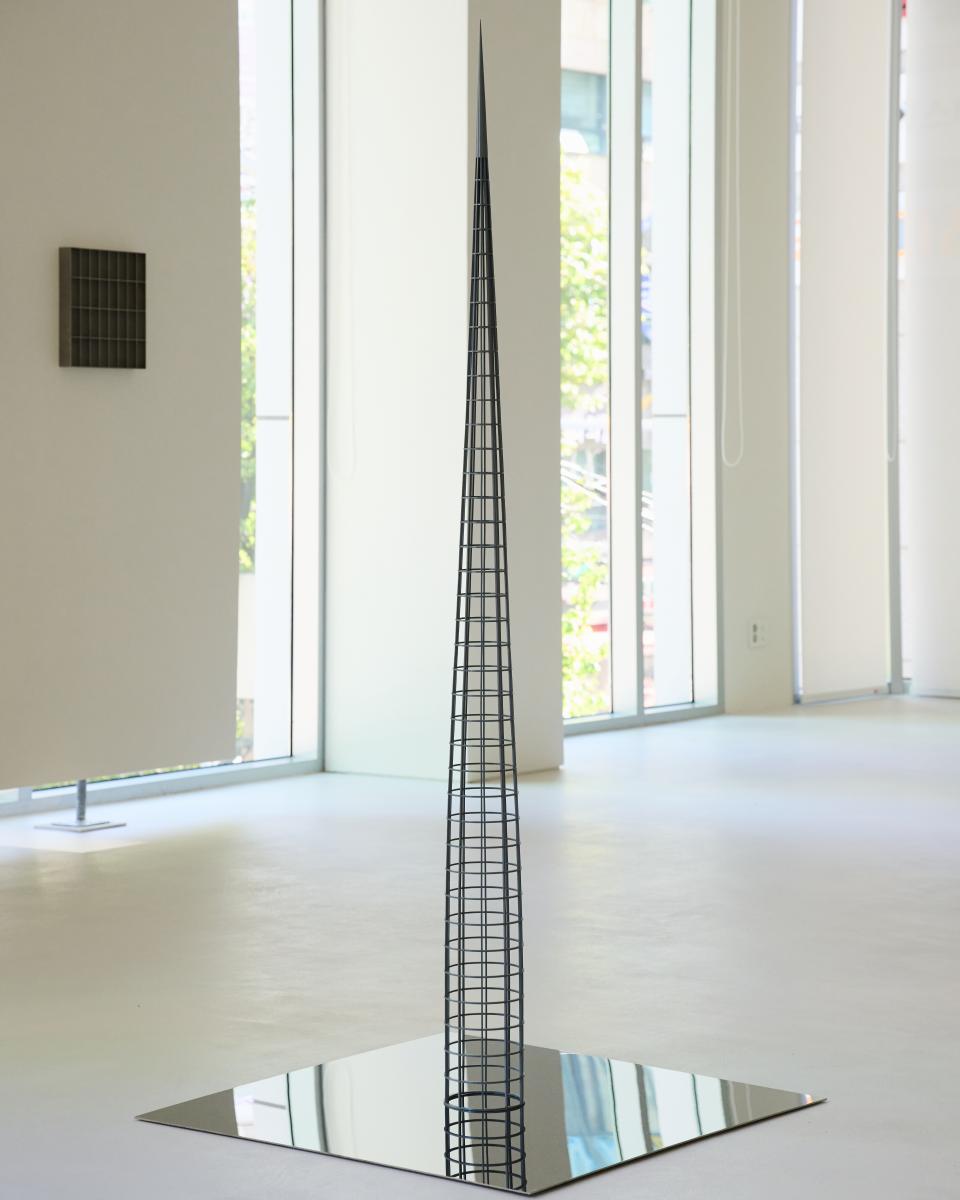
The site-specific conical sculpture installed at the 1st CCA Biennale in 2014 was reinterpreted in collaboration with artist Jaeho Jeong and implemented on a human scale.
Kimsooja, A Needle Woman: galaxy was a memory, earth is a souvenir – The Grid,2025, steel, Sculpture: 200 x 18.2 x 18.2 cm, Base: 90 x 90 cm
Q11. What kind of inspiration does this collaboration with your son bring to you?
Alongside this work, I have been developing a “grating structure.” Its foundation goes back quite some time. In the early 1990s, I created the Deductive Object series, in which I wrapped elements such as window frames from traditional Korean houses or mailboxes—works that also reaffirmed vertical and horizontal structures. Then, a few years ago during the pandemic, while living near Woraksan Mountain, I happened to notice a roadside drainage grate. I wanted to present it as an object in its own right, but it was difficult to realize it in the perfect form I had envisioned. Recently, when my son was reconstructing the needle-shaped sculpture, we tried producing it together while considering the proportions, scale, and thickness I wanted, and I realized that an intersection between his work and mine had emerged.
It is fascinating to discover these meeting points in the context of a family relationship where we inevitably share so much conversation and knowledge of each other. For me, this frame piece also feels like another way of returning to the horizontal and vertical structures that I once focused on so intently. In this sense, just like Meta-Painting, it could also be seen as “Meta-Doing” or “Meta-Object”. In fact, in some ways it even recalls the stripes of Agnes Martin.
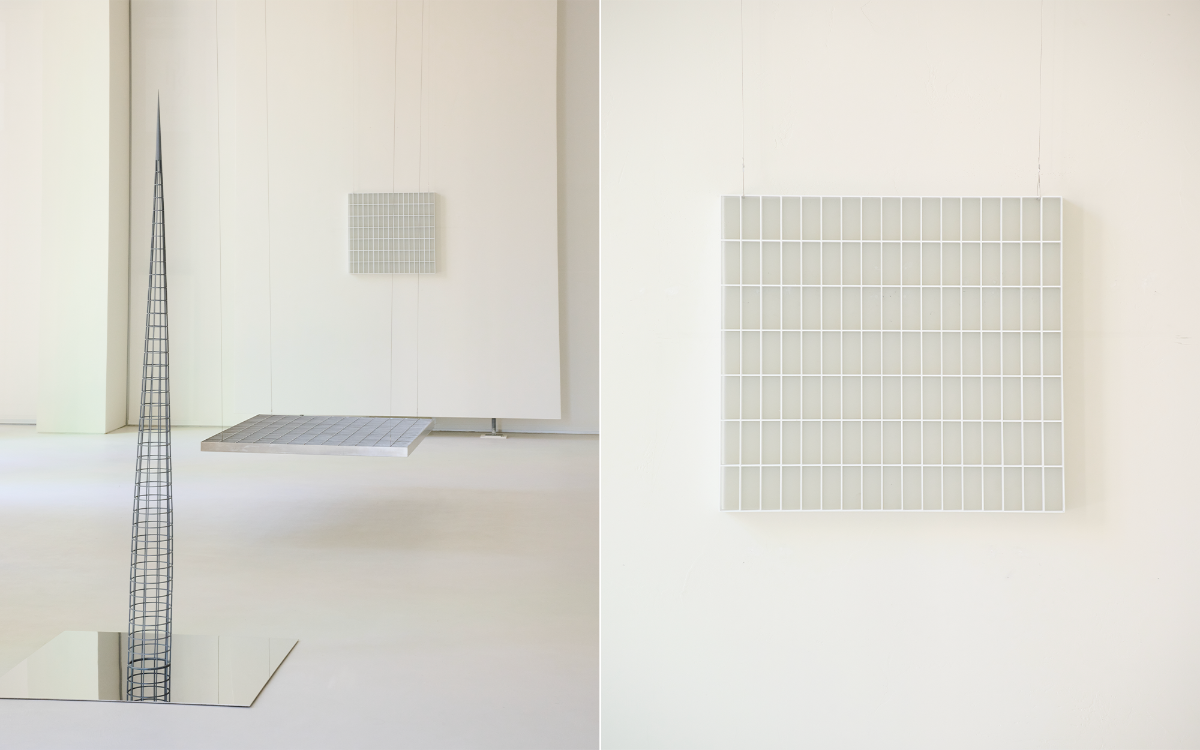
Functioning as both a structural framework and meditative drawings, the grid-like works are a development of the artist's earlier object-based works, forming a quiet rhythm through repetition and subtle variation.
Left (1) Kimsooja, Meta Painting – The Grid, 2025, steel grid, 160 x 109 x 5 cm / Right (2) Kimsooja, Meta Painting – The Grid, 2025, steel grid, paint, 64 x 70 x 5 cm
Q12. You still lead a life of constant travel, moving from place to place. Beyond its artistic significance, how does this way of living affect you personally? And among the many places you have dwelled in, is there one that has stayed in your heart—somewhere you might wish to spend the final chapter of your life?
I feel that Europe suits me nicely, and if I had to choose a single city, it would have to be Paris. Although I have lived in many cities, there are still countless places I have yet to visit. Even when I do, I can never say I know a city entirely, because one experiences it only within the specific context of a given time and social situation. For example, when I worked in Yemen, it was before the war, but I could already sense an atmosphere of violence. I felt something similar in Cairo as well. With the passage of time, when such energies materialize into reality, it strikes me in an uncanny way. I believe there is still an endless amount for me to learn, and ultimately, what I continue to delve into is nature itself. That is how I see it.
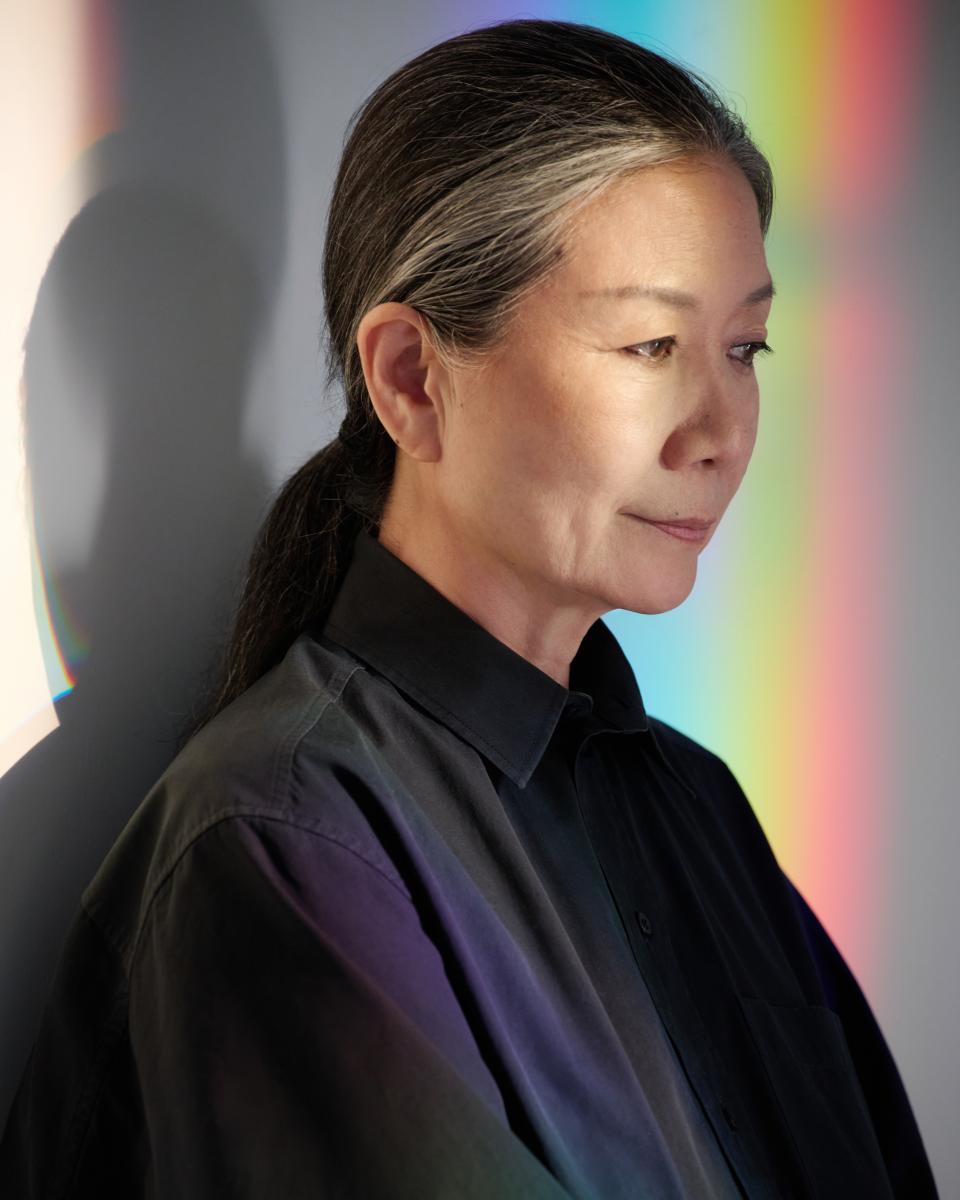
The spectrum of light created by <Breathe> installed on the artist's studio window and artist Kimsooja.
Image courtesy of Podo Museum, Studio Kimsooja
좋아요
0
코멘트
작성하기